
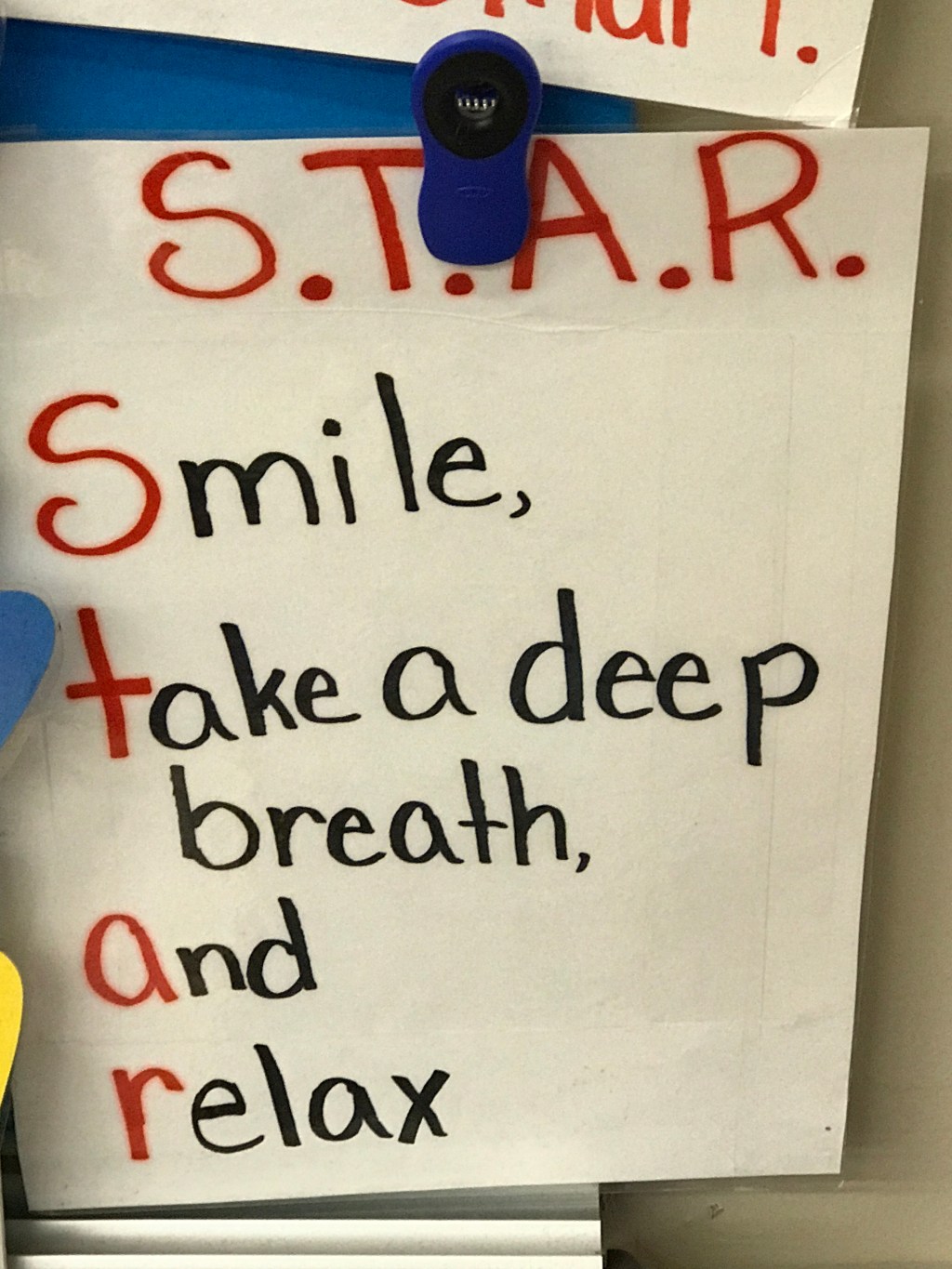
The scene is pretty vivid in my mind. I was late getting to work, my son was supposed to be riding his bike to school, and he called to tell me he was locked out of the house. “Did you look for the key in the garage?” No, I have not done that yet.” I was increasingly aware that the not yet fully developed teenage brain was at work here. “Perhaps you should go out and look for the key? I will stay on the line.” I could feel my anxiety ratcheting up as I told my son to take a deep breath which I clearly needed more than he did. He was anxious because he was going to be late for school and I was on edge because I was behind and still had things to prepare for my morning classes. I parked the car, could feel my blood pressure had risen and just felt exasperated. Mostly I felt this way because of my feeling ill prepared for the day ahead. He called back and had found the key to unlock the back door, but his bike was in the van which I had driven to school and failed to notice. I will not bore you with the details of the rest of the story other than to say I lost it and blew the proverbial gasket as I yelled into the phone…”I am coming, just breathe!” It was I who needed to breathe, and as I listened to the silence on the other end of the line, my mind began to slow a bit as I listened to my son taking a few deep breaths. I felt my feet firmly planted on the ground and tried to bring attention to my own breath. Slowly my body began to settle down and so did my mind. This has stayed with me because initially I was quite hard on myself. Here I am the one who is trying to teach people to be more mindful in their everyday lives and I was not practicing what I was trying to share with others. I should know how to quiet my brain before blowing it.
We all lose it-our reptilian brain takes over and we respond and react in ways that we regret because we are human and because physiologically that is what we are wired to do. How we choose to respond in the heated moment is where mindfulness can enter in and support our choices. Full disclosure…we may still lose it, but we also can begin to develop a stronger awareness of what sensations we feel in our bodies when we get tense and when our amygdala gets activated. Do we clench our fists, do we notice the hair stand up on the back of our neck, does an expletive come out of our mouths or at least the first syllables of one, do our shoulders tense and tighten? Do our eyes and forehead area feel tight? Situations or people trigger us and they can include: lack of sleep because of having young children or a puppy, for some its our commute and traffic, spouses, partners, or friends pushing buttons, for others it is the child who interrupts you for the 23rd time in 12 minutes, for others a colleague or boss that doesn’t understand where you are coming from or rarely takes the time to try and listen.
So what happens in the body when we’re stressed? “The physiological stress response is actually designed to be an asset. It speeds the heart rate and diverts blood away from the gut and to the muscles so we can run away. It constricts the pupils of our eyes so we can focus on the attacker. It dilates the bronchi of the lungs to increase blood oxygenation, and converts energy stored in the liver into fuel for strength and stamina. In short, it keeps us safe.” (Esther Sternberg) “The sympathetic and parasympathetic nervous systems regulate how the body deals with stress. During a perceived stressful or dangerous situation, the sympathetic nervous system goes int fight or flight, triggering the adrenal glands to secrete the hormones that increase blood pressure an heart rate. The parasympathetic nervous system works in conjunction with the sympathetic nervous system , triggering the body to secrete hormones to decrease blood pressure and heart rate, inducing a relaxation response. How does “taking a deep breath support our activated bodies and help us to calm down? Breathing deeply and mindfully helps stimulate the parasympathetic nervous system to trigger this response.” (Sue Doucette) The bottom line is that we need some stress but living in an activated and heightened state of awareness (think trying to escape from a jaguar) is not good for our bodies, our minds or our spirits if we remain in activation mode for extended periods of time.
I love this video that was done by Mindful Schools. I always show it to classes of students because I think it drives home the idea of what happens when we get activated and how we can try and calm our bodies down to support healthy function of the nervous system. We can literally go through days where we do not pay attention to our breath or even notice that we are breathing. Our western culture lives more from the neck up than from the heart. Bringing curiosity and intentionality to situations that require a pause takes discipline and a willingness to accept that we are going to fail. Sometimes we get it right and just as often we do not. I believe Victor Frankl describes this poignantly and offers us wisdom for continuing to practice. He says,
“Between stimulus and response there is a space. In that space is our power to choose our response. In our response lies our growth and our freedom.”

 Looking For Calm
Leave a comment